The first time I saw a Brussels sprout, I was instantly smitten. Nothing had ever been so darling as these tiny, emerald cabbages, round and charming and utterly perfect in their smallness. I anticipated my first bite, knowing it would taste of nectar, sweet and mild, like pale green honey on my tongue. But no! It was sodden and bitter, tasting vaguely of spoiled cheese and gym socks. I felt so betrayed that it was a very long time before I trusted them again.
Many years later, I encountered Brussels sprouts as a side dish, roasted with hazelnuts and butter. They were so fragrant and richly caramelized that I dared to try again. My first bite made me forget my former betrayal, and they’ve been a celebrated guest at my Farm Food dinners ever since.
Rule number one with Brussels sprouts: don’t boil them whole. By the time the core is cooked through, the delicate leaves on the outside become soggy and unpleasantly soft; and, like all crucifers, overcooking can damage the disease-preventing compounds and elicit a sulfuric odor. (But don’t eat Brussels sprouts raw in large quantities, either; like all crucifers, they contain compounds that can interfere with normal thyroid function. In small amounts and occasionally, raw crucifers are okay for most people.)
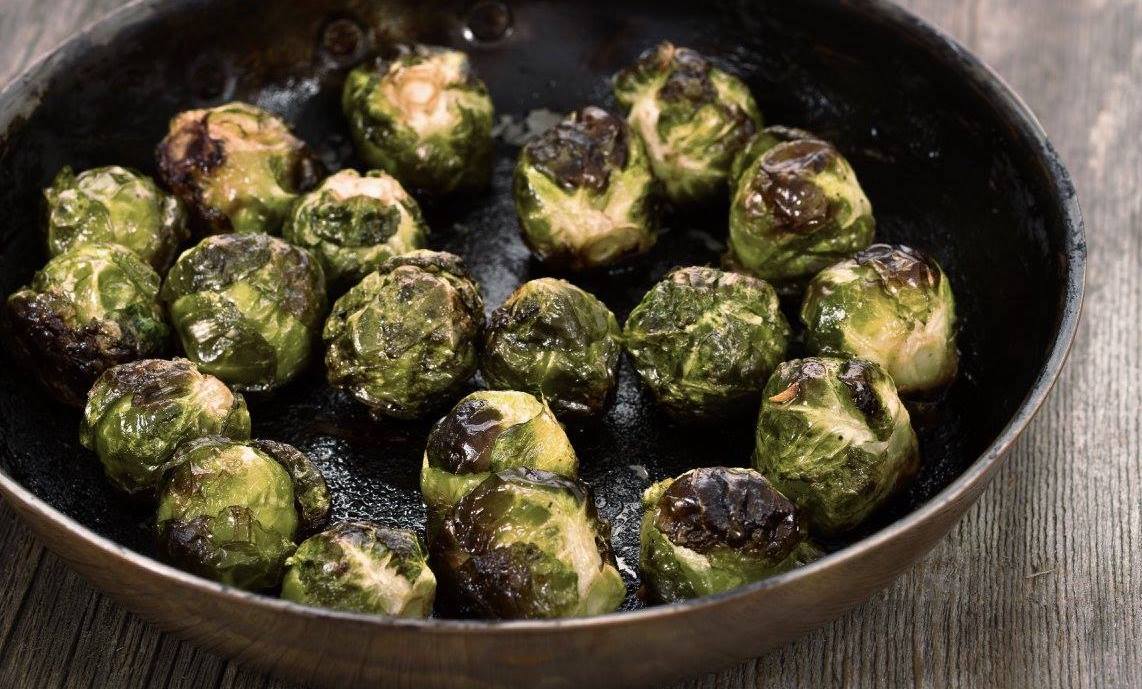
The best way to cook Brussels sprouts is to shred them or remove their leaves, so they cook quickly, or halve or quarter them and sauté. if you want to cook them whole, choose smaller sprouts and use a dry-cooking method like roasting, so they don’t get soggy.
Brussels Sprouts Leaves with Smoked Paprika
Serves 4
1 pound Brussels sprouts
1 to 2 tablespoons refined coconut oil-
1/4 cup thinly sliced shallots
2 garlic cloves, pressed in a garlic press
1 teaspoon smoked paprika
Dash hot paprika, to taste
Shaved Pecorino-Romano (optional)
1. Trim stem ends from Brussels sprouts and remove leaves, transferring them to a large bowl; discard cores or reserve for another use.
2. Heat coconut oil in a large skillet over medium heat and saute shallots and Brussels sprout leaves for 2 to 3 minutes, until lightly browned.
3. Add garlic and paprika, and cook for 30 seconds to 1 minute, stirring. Add 1/2 tablespoon water, cover and cook for 1 to 2 minutes, until leaves are tender. Season with salt and pepper. To serve, divide between individual plates, top with cheese if desired, and serve immediately.
Shredded Sprouts Salad with Apricots and Almonds
Serves 4
1 pound Brussels sprouts
8 to 12 dried apricots
1/2 cup slivered almonds
2 tablespoons peach or apricot preserves
1 small lime, juiced
2 tablespoons olive oil
1/4 cup crumbled Stilton cheese (optional)
1. Remove and discard browning or old outer leaves from Brussels sprouts; trim and discard bottom stems. Halve sprouts lengthwise, then slice them crosswise into thin shreds. Transfer to a large bowl. Using sharp kitchen shears, cut apricots into thin slivers and add to bowl. Add almonds, and toss to mix.
2. In a small bowl, whisk together apricot preserves and lime juice; whisk in olive oil, and season with salt and pepper. Drizzle over Brussels sprouts mixture and toss to mix. Let stand for 5 minutes, and season with salt and pepper.
3. To serve, divide salad between four individual plates. Top with cheese, if desired, and serve immediately.
Pan-roasted Brussels Sprouts with Lemon and Tarragon
Serves 4
3 tablespoons olive oil
2 tablespoons fresh squeezed lemon juice
1 teaspoon lemon zest
1 teaspoon Dijon mustard
1 tablespoon fresh tarragon leaves, minced
1/8 teaspoon white pepper
1 1/2 pounds Brussels Sprouts
1 small shallot, thinly sliced
1. Whisk together 2 tablespoons of the olive oil, lemon juice, zest, mustard and tarragon. Season to taste with sea salt and white pepper.
2. Cut stems from Brussels sprouts and remove outer leaves. Remove the core of each with a v-shaped cut. In a large sauté pan, heat remaining 1 tablespoon of the olive oil over medium heat. Add sprouts and sauté just until they begin to brown, 3 to 4 minutes. Add shallots and cook for 1 minute, stirring.
3. Add vinaigrette, and toss to mix all. Reduce heat to low and cover. After 2 minutes, add 1/4 cup water, cover, and cook for 6 to 9 minutes on low, until Brussels sprouts are tender, stirring occasionally to mix sprouts with sauce. To serve, arrange on a platter or divide between four individual plates, and serve warm.